The Layering Edit

Master the art of layering, every season

How to Layer Thin Pieces Without Looking Bulky

2026-07-13

Quick Answer: To layer without looking bulky, use thin pieces instead of thick ones: start with a fine-knit or lightweight base, vary the lengths so each layer is visible, keep everything within one color family, and define your waist with a belt or a fitted layer. Three thin layers add more warmth and look sleeker than one thick sweater.

Layering is supposed to be the sophisticated move. Depth, texture, that effortless look people photograph in October.

Then you put on three things and catch your reflection looking like a duvet with legs.

The problem is almost never that you layered. It’s what you layered with.

How to Layer Thin Pieces Without Looking Bulky

Why does layering make you look bulky?

Because thickness stacks. A chunky knit over a heavy shirt over a thermal adds warmth, but it also adds inches at every point on your body — and it erases your shape while it does it.

Sleek layering works differently. You’re not adding bulk to add warmth; you’re adding thin, trapped air layers, which is the same principle technical outerwear uses. Multiple thin layers actually insulate better than one thick one, because each gap holds warm air.

So the first fix is subtraction: fewer heavy pieces, more fine ones.

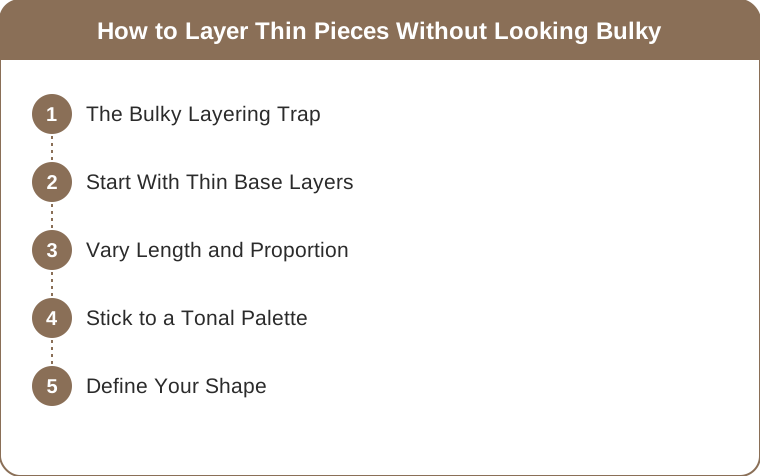
At a glance

What should the base layer be?

Something slim. Fine-gauge knits, lightweight long-sleeve tees, thin merino, a silk or modal camisole — anything that adds warmth without volume.

The base sets the ceiling for everything above it. If layer one is already thick, no amount of styling above will keep the outfit streamlined. Start with something you could wear alone under a blazer without it pulling.

A practical benchmark: if you can’t comfortably push the sleeve up to your elbow, it’s too thick to be a base layer.

How do you keep layers from looking flat?

Vary the lengths. Layering pieces that all end at the same point reads as one lumpy garment. Stagger them — a longer shirt tail below a cropped knit, a jacket that ends above a longline vest — and the eye gets vertical lines to follow.

This is what separates “styled” from “wearing several things.” It costs nothing and it’s the single most visible upgrade in the whole method.

Stick to a tonal palette. Layers within one color family — cream, oatmeal, camel, or three shades of grey — read as intentional and elongating. High contrast between layers chops the body into visible horizontal blocks, which is exactly the effect you’re trying to avoid.

How to Layer Thin Pieces Without Looking Bulky

How do you keep your shape when layering?

Give the eye a waist. A belt over the outer layer, or one fitted piece among the looser ones, keeps your silhouette from disappearing into the stack.

This matters more than people expect, because the bulk complaint is usually a shape complaint. Three thin layers with a defined waist look considered; the same three layers hanging straight down look shapeless — and shapeless reads as bulky even when there’s very little fabric involved.

Two easy versions: belt the coat, or wear the loosest piece open over a fitted base so your outline still shows.

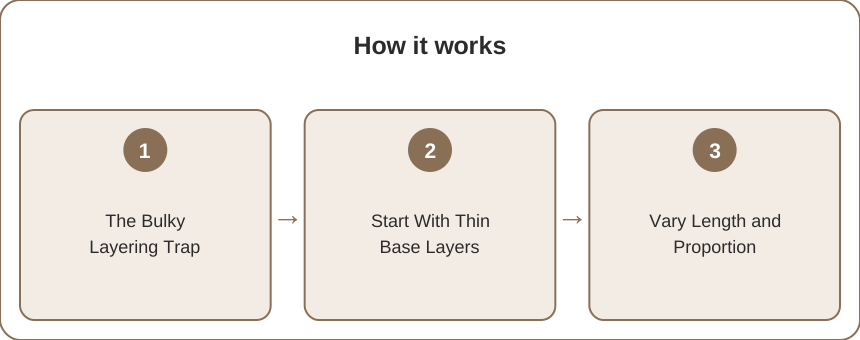
How it works

A three-layer template that always works

If you want one formula to start from, use this:

Layer 1 — the base. A fine-gauge long-sleeve or thin merino. Close to the body, thin enough to disappear.

Layer 2 — the middle. A slightly longer shirt, a fine knit, or a lightweight vest. This is the layer that creates the staggered hemline, so it should end an inch or two below layer one.

Layer 3 — the outer. An open cardigan, a blazer, or a longline coat. Worn open, it creates the two vertical lines that do most of the elongating.

Then add the waist: belt over layer three, or leave layer three open so layer one’s fitted shape still shows. That’s the whole method — three thin pieces, staggered lengths, one tonal palette, one waist point.

It works in October over a tee and in January over thermal merino. The pieces change; the structure doesn’t.

5 Mistakes Everyone Makes When Layering

  1. Starting with a thick base. Everything above it inherits the bulk. Go fine-gauge first, always.
  2. Matching all the hemlines. Same-length layers merge into one shape. Stagger by at least two inches.
  3. Mixing four colors. Each color change is a horizontal break. Two shades, maybe three, within one family.
  4. Forgetting the waist. Straight-hanging layers erase your outline. A belt fixes it in one move.
  5. Layering bulky sleeves under sleeves. Arms are where bulk shows first and gets uncomfortable fastest — keep the inner sleeve thin and let the outer layer be the substantial one.

Frequently Asked Questions

How many layers is too many?

Three to four visible layers is usually the practical ceiling, and only if each one is thin. Beyond that, movement suffers and the silhouette blurs regardless of how fine the fabrics are. Warmth comes from the quality of the layers, not the count.

Can you layer in a way that looks slimming?

Yes — tonal colors, staggered lengths and a defined waist all work in that direction. Vertical lines created by an open long layer over a fitted base are especially effective, because they draw the eye up and down rather than across.

What’s the best base layer for sleek layering?

A fine-gauge merino or lightweight modal long-sleeve. Both are thin enough to disappear under everything else, warm for their weight, and smooth enough that outer layers slide over them without bunching.

TL;DR:

  • Bulk comes from thick pieces, not from layering itself — go thin and stack more
  • Start with a fine-gauge base you could wear under a blazer
  • Stagger the hemlines so each layer reads separately and creates vertical lines
  • Keep layers tonal; every color break is a horizontal line across your body
  • Define the waist with a belt or one fitted layer, or the whole stack reads shapeless

Keep Reading

This article is for general styling and informational purposes only. Trends, sizing, availability and pricing may vary by brand and season.

layeringstylingsleek

← All articles