The Layering Edit

Master the art of layering, every season

The Layering Essentials That Make Every Outfit Better

2026-07-11

A great layered outfit doesn’t happen by accident — it’s built from a handful of specific pieces that each do a very particular job. Skip one category and the whole look falls apart, no matter how nice your coat is. Here’s what actually belongs in a working layering wardrobe.

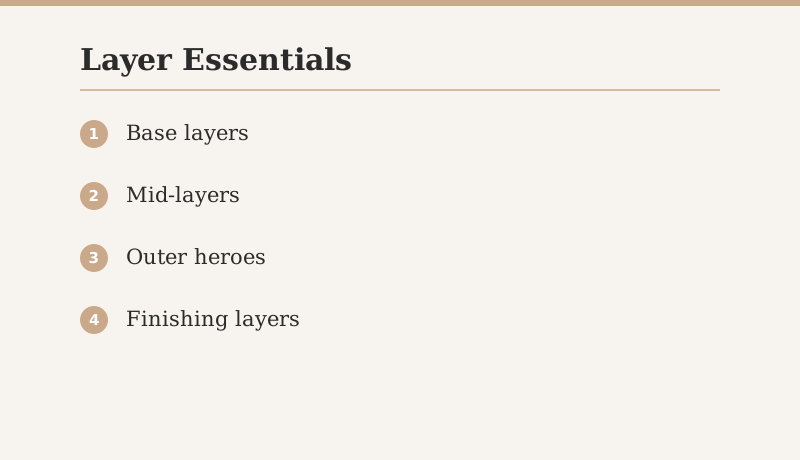
Quick Answer: A solid layering wardrobe needs four categories: thin base layers (fine knits, fitted tees) for warmth without bulk, versatile mid-layers (shirts, cardigans) for texture, structured outer layers (blazers, coats) for polish, and finishing pieces (scarves, vests) for flair. Buy each category in a couple of neutral tones and any outfit layers together instantly.

The Layering Essentials That Make Every Outfit Better

What Are the Essential Base Layers?

Fine knits, fitted tees, and thin turtlenecks are the foundation everything else sits on. They need to be slim enough to disappear under a sweater or blazer — bulky base layers ruin the line of every layer stacked on top. Stock a handful of base pieces in neutral tones like black, cream, and navy, and they’ll mix freely with whatever you layer above them.

Styling flat lay

What Makes a Good Mid-Layer?

Shirts, fine cardigans, and lightweight knits are the bridge between your base and outer layers, and they’re where most of the visual interest actually happens. A crisp shirt collar peeking out from under a sweater, or a cardigan layered over a tee, adds texture that a single garment simply can’t. Look for mid-layers in breathable, mid-weight fabrics — too thick and they won’t fit under a coat; too thin and they add nothing.

Point detail

What Should Your Outer Layers Do?

Blazers, denim jackets, trenches, and coats are the layer that finishes the look and handles the actual weather. A good outer-layer rotation covers a range of temperature zones: something light for mild days, a structured mid-weight coat for cool ones, and a heavier wool coat for real cold. Two or three well-chosen coats will outperform ten cheap ones, both for warmth and for how sharp the outfit looks.

What Finishing Touches Complete a Layered Look?

Scarves, vests, and light jackets are the accent layer — small additions with an outsized visual impact. A scarf in a contrasting texture adds warmth and a pop of color for relatively little money; a vest adds dimension without the bulk of a full jacket. These are the pieces that turn “I put on clothes” into “I got dressed,” and they’re usually the cheapest category to build out.

Style guide

How Many Pieces Do You Need in Each Category?

You don’t need a huge wardrobe to layer well — you need the right pieces in each category. A working starter set looks like 3-4 base layers, 3-4 mid-layers, 2-3 outer layers, and 2-3 finishing pieces, all coordinated around two or three neutral tones like black, cream, and camel. That’s roughly 12-14 pieces total, and because everything is neutral, they combine into dozens of different outfits rather than a dozen fixed looks. Buying one category at a time — starting with base layers, since they touch everything else — keeps the investment manageable instead of overwhelming.

Does the Order You Put Layers On Actually Matter?

Yes, and it’s simpler than it sounds: thinnest to thickest, closest-fitting to loosest. A fitted base layer goes on first so it doesn’t bunch under anything, followed by a slightly looser mid-layer, then the roomiest outer piece last. Skip a step — say, going straight from a thick sweater to a bulky coat with nothing thin underneath — and you’ll end up looking padded rather than intentionally layered, which is exactly the mistake below.

5 Mistakes Everyone Makes With Layering

  1. Making every layer bulky. If your base, mid, and outer layer are all thick, you’ll look padded, not polished. At least one layer needs to be thin.
  2. Ignoring proportion. A long cardigan under a long coat just disappears — vary the lengths so each piece stays visible.
  3. Matching everything too literally. Layering works best with tonal coordination, not identical colors; a little contrast reads as intentional.
  4. Forgetting the middle. Base-plus-coat with nothing in between is really two layers pretending to be three — that’s where the mid-layer earns its keep.
  5. Buying the outer layer first. Coats get the glory, but base and mid-layers are what actually make a coat look styled instead of just worn. Your future self, freezing in a great coat over a bad tee, will thank you for building bottom-up.

FAQ

How many layering pieces do I actually need to start?

A workable starter set is around 8-10 pieces: a few base layers, a few mid-layers, two outer layers, and a couple of accent pieces, all in coordinating neutral tones.

Does layering work in warm climates too?

Yes — layering isn’t only about warmth. A thin base layer under a lightweight kimono or open shirt still adds visual depth even on warmer days; you just skip the heavy outer coat.

What’s the easiest way to start building a layering wardrobe?

Start with your base layers in a couple of neutral colors, since they touch every other piece you own. From there, add one mid-layer and one outer layer at a time rather than buying a whole wardrobe at once.

TL;DR:

  • Build layering wardrobes from four categories: base, mid, outer, and finishing pieces
  • Keep base layers thin (fitted tees, fine knits) so they don’t add bulk
  • Mid-layers (shirts, cardigans) add texture and bridge base to outer layers
  • Rotate two or three outer layers across temperature zones rather than owning one coat
  • Finishing pieces (scarves, vests) are the cheapest way to add personality
  • Vary proportions and avoid making every layer equally thick

Keep Reading

This article is for general styling and informational purposes only. Trends, sizing, availability and pricing may vary by brand and season.

← All articles